
Menu

Every technology company has a core philosophy that dictates how it grows. For RTC Tek, our roots have always been deeply intertwined with the spirit of raw, campus innovation. That is why our recent collaboration with BITS Pilani’s annual fest is more than just a standard corporate sponsorship – it is a proud, full-circle milestone that perfectly blends our …
 by Content Team
Test automation has become a cornerstone of modern software development, enabling teams to accelerate release cycles, improve quality, and scale testing efforts efficiently. However, traditional automation frameworks come with a persistent challenge; high maintenance costs. Even minor changes in the user interface, APIs, or workflows can break automated tests, leading to frequent script updates and reduced trust in …
by Content Team
Software quality assurance is undergoing one of the most significant transformations in its history. Traditional testing models were built for slower release cycles, stable architectures, and predictable deployment schedules. Today, organizations operate in a very different environment shaped by cloud-native systems, continuous integration pipelines, distributed applications, and rising customer expectations for flawless digital experiences. Modern QA teams are no longer responsible …
by Content Team
Accessibility has long been treated as a compliance checkbox; either a product passes or fails against established standards. While frameworks like WCAG have played a critical role in shaping inclusive digital experiences, the traditional binary approach is no longer sufficient in today’s experience-driven ecosystem. Organizations are now shifting toward outcome-based accessibility metrics; an approach that …
by Content Team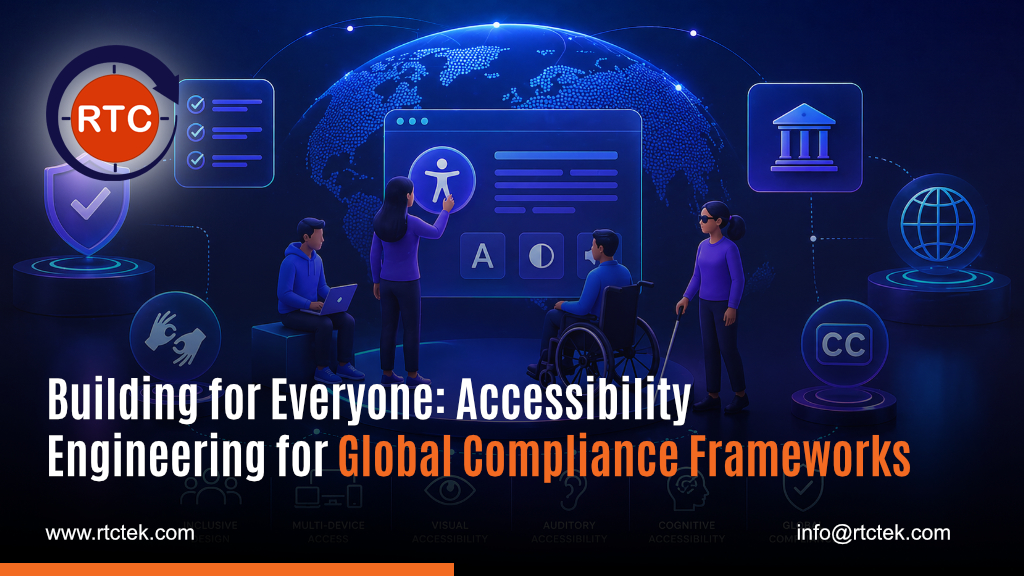
Digital accessibility has moved far beyond a compliance checkbox. It now sits at the intersection of customer experience, regulatory governance, brand trust, and business growth. As organizations expand globally, inaccessible websites, mobile apps, enterprise systems, and digital documents create measurable commercial risk. With the European Accessibility Act now enforceable, continued ADA-related litigation, and increasing awareness around inclusive …
by Content Team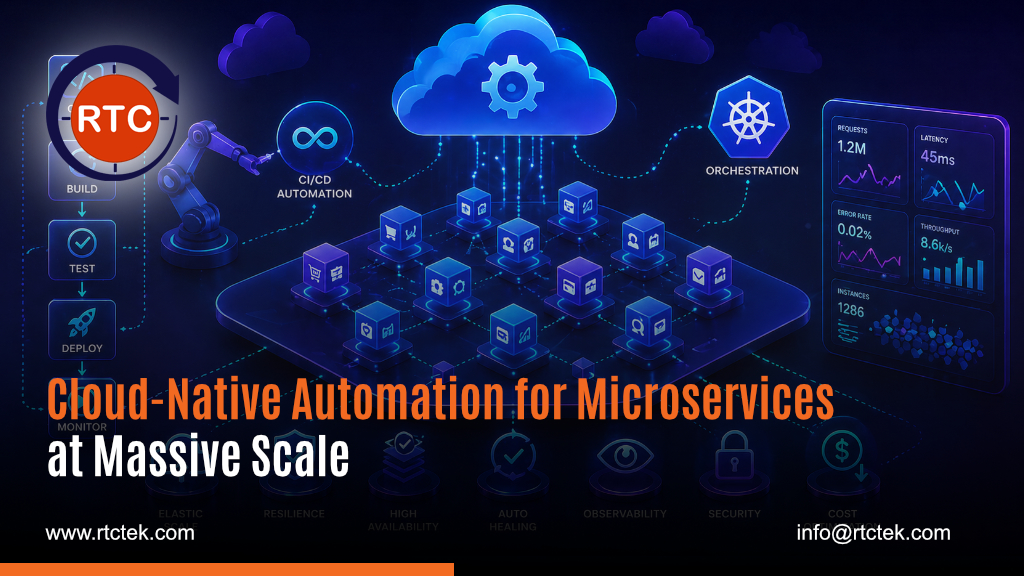
Modern enterprises are no longer building monolithic systems; they are embracing microservices to achieve agility, scalability, and resilience. However, as systems grow into hundreds or even thousands of services, managing them manually becomes unsustainable. This is where cloud-native automation steps in as a critical enabler. Cloud-native automation is not just about automating deployments; it is …
by Content Team
Modern enterprises are no longer operating within a single data environment. Data today is distributed across on-premise systems, multiple cloud platforms, and various storage layers such as data lakes and warehouses. This distributed landscape has created a pressing need for faster, unified access to data without the inefficiencies of duplication or movement. Traditional data architectures, …
by Content Team
Organizations today are no longer confined to a single cloud provider. The rapid adoption of multi-cloud environments has become a strategic necessity rather than a technical experiment. Businesses leverage Amazon Web Services (AWS), Microsoft Azure, and Google Cloud Platform (GCP) simultaneously to optimize cost, performance, compliance, and vendor capabilities. However, this flexibility introduces a critical challenge: data portability. Moving, synchronizing, …
by Content Team
Data is no longer just an operational asset; it is the foundation of digital business. However, as organizations accelerate cloud adoption, API integrations, and data-driven decision-making, the exposure of sensitive information has increased significantly. Traditional security measures are proving insufficient in addressing modern threats such as ransomware, insider attacks, and regulatory scrutiny. This has led …
by Content TeamInput your search keywords and press Enter.