
Engagement Overview
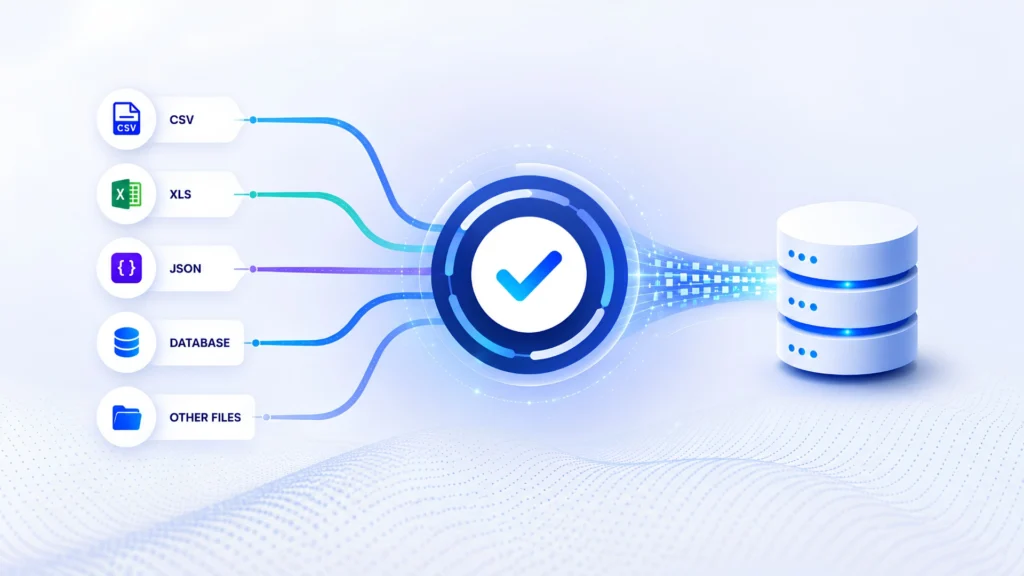
A multi-client insurance data operation needed to scale data ingestion without scaling engineering effort at the same rate. Round the Clock Technologies redesigned the ingestion model into an automated, client-centric framework that replaced fragmented manual workflows with governed, file-triggered pipelines, centralized validation, and real-time operational visibility. *
| 95% | 66% | 6 FTEs to 2 FTEs | Config-led onboarding |
|---|---|---|---|
| Reduction in workflow complexity | Reduction in engineering overhead | Support effort reduced after automation | New clients without proportional build effort |
Our Client
The client’s organization works in a reinsurance space to manage insurance data for multiple client accounts, including quotes, policies, claims, policies paid, and combined datasets. Source files arrive in Azure Data Storage containers as both inception-to-date loads and incremental loads. The processed data supports downstream reporting, operational analysis, and business decision-making.
Being a US organization operating in regulated or data-sensitive environments, this pattern is familiar: data ingestion must be timely, auditable, repeatable, and scalable, but many teams still rely on fragmented workflows that grow more expensive with every new client, dataset, or reporting requirement.
Business Challenge
| 1. Each dataset required separate notebooks for raw ingestion and standardized transformation. 2. Manual job triggering created delays, operational dependencies, and avoidable execution risk. 3. Limited dependency management increased the chance of incomplete or inconsistent processing. 4. Validation checks were not centralized, making data quality trends harder to track. 5. Monitoring was limited, so technical and business stakeholders lacked a common operational view. 6. Adding new clients required additional engineering effort rather than reusable configuration. |
The system was functional, but it was not built for scale. It absorbed engineering capacity that could otherwise be used for higher-value data engineering, analytics, and client delivery work.
Solution Overview
RTC Tek designed a client-centric ingestion framework that consolidates execution into one governed pipeline per client. Within each pipeline, Databricks Workflow tasks manage file validation, processing decisions, raw loading, raw-layer validation, warehouse ingestion, business rule validation, technical validation, and quality reporting.
| Capability | How it Works | Business Value |
|---|---|---|
| File-triggered automation | Pipelines start when source files arrive in Azure Data Storage. | Eliminates manual job execution and improves data timeliness. |
| Client-centric orchestration | One pipeline per client coordinates all required workflow tasks. | Reduces duplicated workflows and simplifies operational ownership. |
| Pre-execution validation | Required files are checked before processing continues. | Prevents incomplete runs and protects downstream data integrity. |
| Centralized data quality | Business, technical, and raw-layer validation results are stored for tracking. | Improves auditability, governance, and issue resolution. |
| Power BI monitoring | Dashboards show execution status, pass/fail rates, quality trends, and root-cause indicators. | Gives business and technical teams shared visibility. |
Framework Workflow
| Workflow Task | Purpose |
|---|---|
| File Validation | Confirms that all required source files are present and accessible before processing starts. |
| Processing Decision Logic | Continues or terminates the run based on validation results, avoiding partial or unnecessary processing. |
| Raw Load Ingestion | Loads source files into the raw staging layer without modification to preserve lineage and auditability. |
| Raw Layer Validation | Checks schema, structure, and completeness before transformation logic is applied. |
| Warehouse Ingestion | Normalizes client data into a consistent output structure for downstream consumption. |
| QA and Validation Suites | Runs business rules, technical checks, and quality validations, then stores results centrally. |
Measured Business Impact
| Area | Before | After | Impact |
|---|---|---|---|
| Workflow complexity | 6-10 independently maintained pipelines per client dataset | One client-based pipeline with task-level orchestration | 95% reduction in workflow count |
| Execution | Manual triggering and scheduling effort | Automated file-based triggering | 100% automation of job initiation |
| Monitoring | Limited execution visibility | Centralized Power BI dashboard | 75% reduction in monitoring effort |
| Data quality | Ad-hoc validation checks | Structured validation framework | 75% faster validation |
| Maintenance | 6 FTEs supporting ingestion operations | 2 FTEs focused on analysis and onboarding | 66% reduction in support effort |
| Scalability | New clients required new build effort | New clients onboarded primarily through configuration | Growth without proportional engineering cost |
Many enterprises are under pressure to modernize data operations while controlling costs, improving governance, and accelerating decision-making. Automated ingestion is not only a technical improvement; it directly affects how quickly the business can trust and use data.
| 1. Faster data availability for reporting, analytics, and operational decisions. 2. Lower manual dependency across recurring ingestion and validation processes. 3. Improved audit readiness through centralized validation history and pipeline evidence. 4. Reduced engineering burden as client, partner, and dataset volumes grow. 5. A repeatable foundation that can extend across additional domains, data products, and reporting needs. |
Technology Stack
| Technology | Role in the Solution |
|---|---|
| Databricks Workflows | Pipeline orchestration and task dependency management |
| Python / Notebooks | Data ingestion, transformation, and validation logic |
| Azure Data Storage | Source file landing zone and raw data storage |
| SQL / Delta Tables | Structured storage, querying, and downstream consumption |
| Power BI | Operational dashboards, quality trends, and stakeholder reporting |
This engagement demonstrates how automated data ingestion can turn a fragmented, manual operating model into a scalable data engineering capability. By replacing duplicated workflows with a governed client-centric framework, the organization reduced complexity, lowered support effort, improved data confidence, and created a foundation for growth.
For companies managing multi-client, multi-source, or regulated data operations, the same pattern can help modernize ingestion while improving reliability, auditability, and cost control.
* Client details generalized to protect confidentiality