
Menu

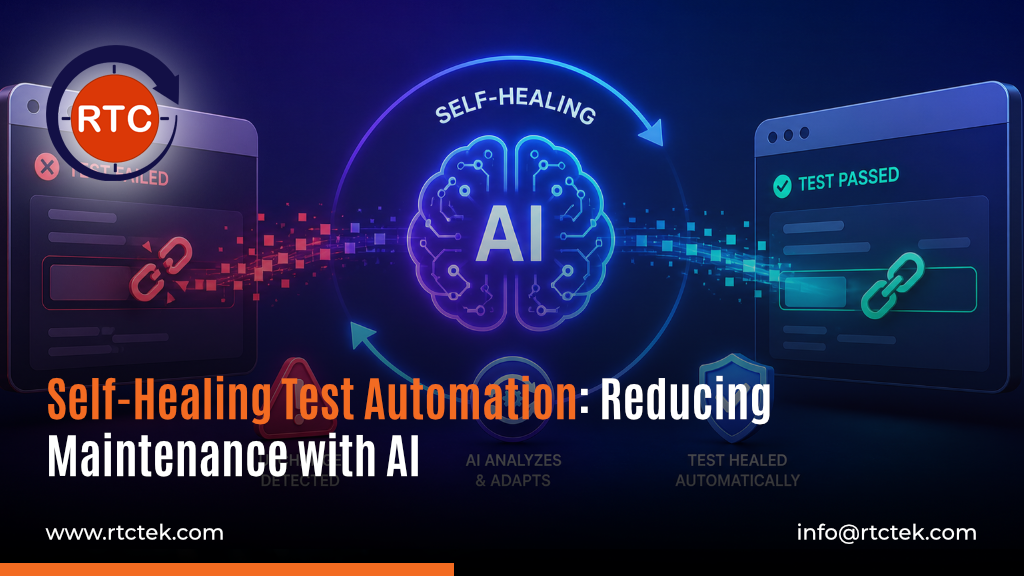
Test automation has become a cornerstone of modern software development, enabling teams to accelerate release cycles, improve quality, and scale testing efforts efficiently. However, traditional automation frameworks come with a persistent challenge; high maintenance costs. Even minor changes in the user interface, APIs, or workflows can break automated tests, leading to frequent script updates and reduced trust in …
 by Content Team
Software quality assurance is undergoing one of the most significant transformations in its history. Traditional testing models were built for slower release cycles, stable architectures, and predictable deployment schedules. Today, organizations operate in a very different environment shaped by cloud-native systems, continuous integration pipelines, distributed applications, and rising customer expectations for flawless digital experiences. Modern QA teams are no longer responsible …
by Content Team
Modern enterprises are no longer building monolithic systems; they are embracing microservices to achieve agility, scalability, and resilience. However, as systems grow into hundreds or even thousands of services, managing them manually becomes unsustainable. This is where cloud-native automation steps in as a critical enabler. Cloud-native automation is not just about automating deployments; it is …
by Content Team
Organizations today are no longer confined to a single cloud provider. The rapid adoption of multi-cloud environments has become a strategic necessity rather than a technical experiment. Businesses leverage Amazon Web Services (AWS), Microsoft Azure, and Google Cloud Platform (GCP) simultaneously to optimize cost, performance, compliance, and vendor capabilities. However, this flexibility introduces a critical challenge: data portability. Moving, synchronizing, …
by Content Team
In today’s digital-first economy, cost optimization is no longer limited to budget control, it has evolved into a strategic engineering priority. Enterprises are expected to deliver faster, scale efficiently, and continuously innovate, all while maintaining cost discipline. Traditional development models often dependent on manual processes, siloed teams, and duplicated efforts are increasingly becoming inefficient and expensive. This is where smart automation and reusable components are transforming …
by Content Team
Software delivery cycles in 2026 are faster, more distributed, and more complex than ever before. Organizations are releasing new features weekly or even daily across cloud-native architectures, microservices ecosystems, and highly integrated digital platforms. In this environment, ensuring quality through traditional manual testing methods has become both inefficient and unsustainable. This is where test automation becomes not just a …
by Content Team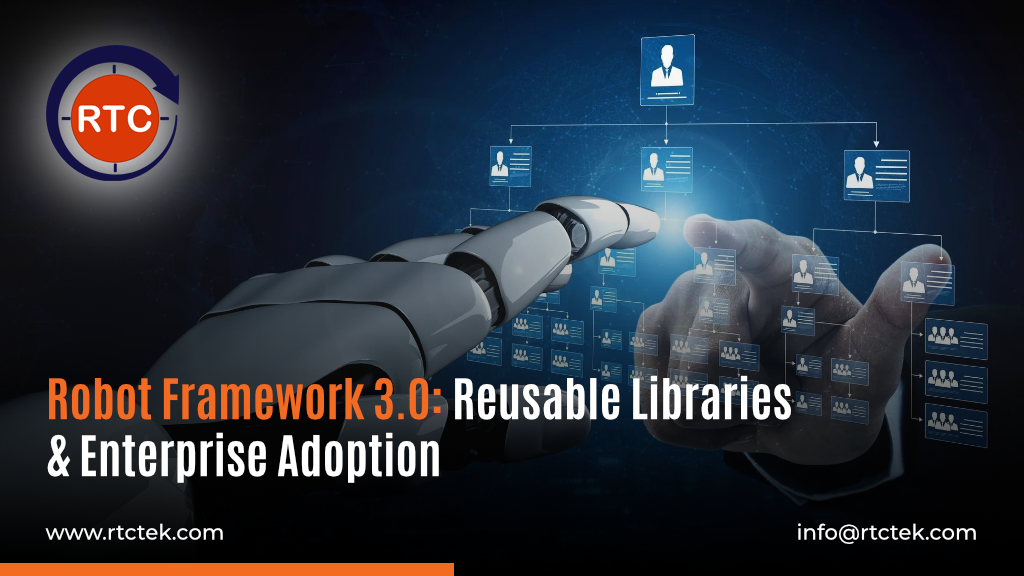
As software delivery cycles continue to shrink, enterprises are under constant pressure to release faster without compromising quality. Test automation has evolved from a tactical activity into a strategic capability that directly impacts speed, stability, and customer trust. However, scaling automation across large, distributed teams remains a persistent challenge. Robot Framework 3.0 addresses this challenge by combining readable, keyword-driven …
by Content Team
Modern software delivery has undergone a fundamental transformation. Agile development, DevOps practices, and cloud-native architectures have significantly reduced release cycles, increased deployment frequency, and distributed ownership across cross-functional teams. While development and infrastructure practices have evolved rapidly, quality assurance has often struggled to keep pace. Traditional QA automation approaches, which rely heavily on centralized test …
by Content Team
Cloud-native technologies have reshaped modern software delivery. Applications are no longer monolithic systems running on fixed infrastructure. Instead, they are composed of microservices deployed in containers, orchestrated by Kubernetes, and scaled dynamically based on demand. While this architectural shift has unlocked speed and scalability, it has also introduced significant operational complexity. A single user request …
by Content TeamInput your search keywords and press Enter.